Welcome to the website for landscape facilities products and knowledge.

What is the table’s resistance to damage from extreme temperature fluctuations?
The resistance of a table to damage from extreme temperature fluctuations depends primarily on its core construction materials and manufacturing quality. Solid wood tables, while beautiful, can expand and contract significantly, potentially leading to cracks or warping. Engineered wood products like MDF or plywood offer better dimensional stability but may degrade if the adhesive fails. Metals can conduct temperature rapidly, causing surface discomfort and potential condensation issues, while glass risks thermal shock and cracking. The most resilient options are often high-quality plastics, composites, or properly sealed and acclimatized solid woods. The table's finish plays a critical role; a robust, flexible sealant can mitigate moisture exchange and protect the substrate. Proper design accounting for expansion joints, stable bases, and material compatibility is essential. For environments with severe swings, such as sunrooms or unheated spaces, selecting a table specifically rated for thermal stability is crucial. Ultimately, understanding the coefficient of thermal expansion for your table's materials provides the clearest answer to its long-term durability under thermal stress.
Related search:
Recommendation
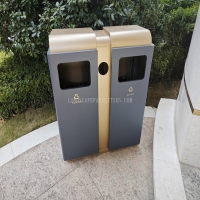
Double-bucket garbage bin, outdoor, metal, multi-color, powder-coated, double-bucket trash can






