Welcome to the website for landscape facilities products and knowledge.

How does the table’s design accommodate users with mobility or accessibility needs?
Thoughtful table design is fundamental to creating inclusive spaces. Modern principles of universal design ensure that tables are not only aesthetically pleasing but also functionally accessible to individuals with diverse mobility and accessibility requirements. Key accommodations include adjustable height mechanisms, which allow tables to be raised or lowered to accommodate wheelchair users or those who prefer to sit or stand. A critical feature is providing ample clear floor space and knee clearance beneath the table, with a minimum depth of 19 inches and height of 27 inches as per common guidelines, allowing for comfortable approach and use. Surfaces and edges are designed to be smooth and rounded to prevent injury, while controls for any adjustable parts are intuitive and operable with one hand or minimal force. The selection of stable, non-slip materials ensures safety, and considerations for color contrast between the table and its surroundings aid users with visual impairments. By integrating these features, designers move beyond mere compliance to foster true independence, dignity, and seamless participation for all users in work, dining, and social environments.
Related search:
Recommendation
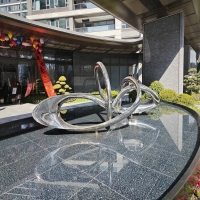
Abstract art sculpture, stainless steel metal sculpture, large-scale water feature sculpture






