Welcome to the website for landscape facilities products and knowledge.

What is the table’s resistance to damage from exposure to outdoor camping gear?
When evaluating outdoor furniture for camping environments, a table's resistance to damage from exposure to outdoor camping gear depends on several critical factors. The primary consideration is material selection. High-density polyethylene (HDPE), powder-coated aluminum, and marine-grade polymer tables demonstrate superior resilience against scratches from cookware, impacts from falling equipment, and abrasion from dragged backpacks.
Construction quality significantly influences durability. Tables with reinforced leg joints, thickened table edges, and integrated support structures better withstand the weight and shifting of heavy coolers, stoves, and storage containers. The surface treatment proves equally vital—textured finishes hide minor scratches, while UV-stabilized materials prevent fading from sun exposure when gear is repeatedly placed and removed.
Weather resistance intersects with gear durability. Tables that repel moisture prevent rust and warping when wet tents or rain-soaked equipment contact surfaces. Non-porous materials resist stains from spilled fuels, food, or cleaning chemicals commonly used in camping. Advanced designs incorporate corner protectors and reinforced stress points where heavy items typically cause structural failure.
Maintenance requirements reveal true durability. The most resistant tables clean easily after contact with dirt, gravel, or ash that accompanies camping equipment, without requiring special treatments. Ultimately, optimal performance comes from tables specifically engineered for recreational use, where material thickness, chemical resistance, and impact tolerance are prioritized over aesthetic considerations alone.
Related search:
Recommendation
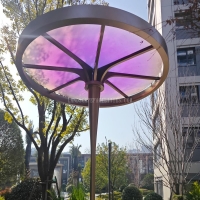
Metal frame with gradient color acrylic combined with high-end shading landscape facilities






