Welcome to the website for landscape facilities products and knowledge.

How does the table perform in extreme weather conditions, such as heavy rain or intense sunlight?
When investing in outdoor furniture, a critical question arises: how will this table hold up against nature's fiercest elements? From torrential downpours to blazing sunlight, extreme weather poses significant challenges that separate temporary patio pieces from truly durable outdoor investments.
The performance during heavy rain primarily depends on material composition and construction. Powder-coated aluminum tables demonstrate exceptional water resistance, as the coating forms a protective barrier that prevents oxidation. Solid teak and other dense hardwoods contain natural oils that repel moisture, though they require periodic sealing. The true test lies in joinery—quality tables use stainless steel fasteners and waterproof adhesives at connection points to prevent water ingress and structural weakening. Tables with integrated drainage channels in their design outperform flat surfaces by preventing water accumulation.
Under intense sunlight, material stability becomes paramount. UV radiation causes fading, cracking, and molecular breakdown in inferior materials. High-density polyethylene (HDPE) lumber resists UV damage through embedded pigments rather than surface stains. Powder coatings with UV inhibitors maintain color integrity for decades rather than years. Temperature fluctuations test expansion and contraction rates; cast aluminum exhibits minimal movement compared to thin tubular metals that can warp. Glass tabletops with tempered, tinted options reduce both heat absorption and UV transmission.
Innovative manufacturing has developed composite materials specifically for climate resilience. These engineered substances combine polymers with natural fibers, achieving the aesthetic of wood without susceptibility to rot or fading. Advanced powder coating technologies now incorporate ceramic microparticles that reflect infrared radiation, keeping surface temperatures up to 20% cooler than conventional finishes.
Maintenance practices significantly extend performance in harsh conditions. While quality tables need minimal care, seasonal cleaning with appropriate solutions removes corrosive pollutants. Protective covers during extended harsh periods, though seemingly simple, dramatically prolong lifespan. Storage considerations matter—elevating tables prevents ground moisture contact, while proper ventilation inhibits mold growth.
Manufacturers now simulate decades of weather exposure through accelerated testing chambers that replicate rain, UV exposure, and thermal cycling. These controlled extremes help develop tables that withstand coastal salt spray, desert dryness, and humid subtropical climates with equal competence. The most reliable products often carry specific certifications for UV resistance, water impermeability, and thermal stability.
Ultimately, a table's extreme weather performance hinges on intentional engineering rather than accidental durability. From material selection to protective treatments and intelligent design, each element contributes to creating outdoor furniture that doesn't merely survive but thrives in challenging environments, transforming temporary outdoor pieces into permanent landscape fixtures.
Related search:
Recommendation
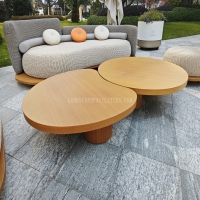
Elliptical metal outdoor table with nested design, resembling wood grain, round table






