Welcome to the website for landscape facilities products and knowledge.

Are there any recommended placement guidelines for the Landscape Square table in classrooms or educational settings?
Integrating Landscape Square tables into educational environments requires thoughtful placement to maximize their potential for collaboration and engagement. Unlike traditional rows, these modular tables thrive in configurations that promote interaction. A highly effective method is arranging them in small clusters, typically with two tables forming a larger square for four to six students. This setup naturally fosters small-group discussion and project-based work while allowing the teacher easy access to each group.
Crucially, ensure ample space between clusters to facilitate movement. This "breathing room" is essential for students to shift between group and individual tasks and for instructors to circulate freely for personalized instruction. Position the tables to avoid creating "dead zones" in the classroom; consider sightlines to the main teaching board or screen from all seats. For whole-class instruction, a U-shape or hollow square configuration with the tables can center attention on the instructor while maintaining a connected, participatory feel.
The versatility of Landscape Square tables lies in their adaptability. In maker-spaces or libraries, linear arrangements against walls can create efficient project stations. The key is aligning the layout with the pedagogical activity—dynamic groupings for collaborative phases and more dispersed setups for focused work. Always prioritize safety by securing tables when not in active rearrangement and ensuring clear pathways for egress. Ultimately, successful placement transforms these tables from mere furniture into dynamic hubs that support a fluid, student-centered learning ecosystem.
Related search:
Recommendation
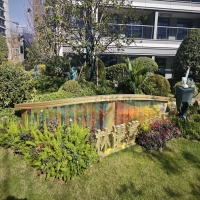
Metal and acrylic color-changing combined curtain wall for large-scale public landscape facilities






