Welcome to the website for landscape facilities products and knowledge.

What is the table’s resistance to damage from prolonged exposure to construction dust?
In construction and industrial environments, a table's resistance to damage from prolonged exposure to construction dust is a critical factor for longevity and functionality. Construction dust, a mixture of fine particulate matter from materials like concrete, wood, drywall, and silica, is highly abrasive and can be chemically active. Its prolonged settlement and accumulation on surfaces lead to a slow, grinding wear that can degrade finishes, clog mechanisms, and infiltrate porous materials.
The primary defense lies in the table's material composition and surface finish. High-pressure laminate (HPL) tops, powder-coated steel frames, and solid phenolic resin surfaces offer exceptional resistance. These non-porous materials prevent dust particles from embedding into the surface, allowing for easy cleaning. A critical feature is a fully sealed edge banding and a seamless design that eliminates crevices where dust can accumulate and cause swelling or delamination.
Furthermore, the quality of the protective finish is paramount. Tables with a thick, catalyzed polyurethane or epoxy coating create a hard, inert barrier. This barrier resists the abrasive scratching caused by dust particles being wiped across the surface during cleaning. For metal components, a high-quality powder coat applied over proper primer prevents corrosion that can be accelerated by hygroscopic dust drawing moisture to the frame.
Regular maintenance is the complementary key to resistance. While a well-made table is designed to endure, a routine of gentle dry dusting followed by damp wiping with a pH-neutral cleaner prevents the formation of a hardened, abrasive cake. Tables with simple, robust designs and minimal decorative grooves fare best, as they present no traps for dust accumulation.
Ultimately, a table's resilience is not about being impervious but about strategic design. The best industrial and workshop tables are engineered with inert, hard, and seamless surfaces that minimize dust adhesion and facilitate its removal, thereby mitigating the cumulative damaging effects of prolonged exposure. Investing in such specifications ensures the table remains a reliable asset in dusty conditions, avoiding premature wear, surface staining, and structural compromise.
Related search:
Recommendation
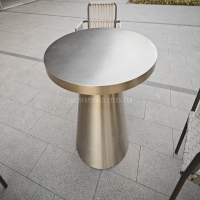
Outdoor Metal Table - Classic Outdoor Furniture, Stainless Steel Table, Durable and Reliable






