Welcome to the website for landscape facilities products and knowledge.

How does the table’s design promote social interaction in communal spaces?
In communal spaces, from bustling cafes to collaborative offices, the humble table is far more than a surface. Its design acts as a silent yet powerful social catalyst, actively shaping how people connect and communicate. The primary mechanism is proximity and orientation. Round tables, for instance, eliminate hierarchical "heads" and create sightlines between all participants, naturally encouraging inclusive conversation. Larger communal tables or benching systems break down physical barriers between small groups, fostering chance interactions and a sense of shared territory.
Beyond shape, scale and dimension are crucial. Designers often employ an "approachable" height and ample legroom to avoid a cramped, formal feel. Tables sized to encourage smaller clusters within a larger group balance community with intimacy. The materiality also speaks volumes; warm, tactile materials like natural wood feel more inviting than cold, sterile surfaces, subtly promoting lingering and comfort.
Furthermore, integrated design features can directly prompt engagement. Tables with built-in board game surfaces, central planters, or shared power outlets provide focal points and practical reasons for interaction. The strategic placement of tables—arranged to facilitate flow rather than create dead ends—invites people to move, pause, and join conversations.
Ultimately, a socially-promotive table design intentionally moves away from isolation. It considers the human behaviors of eye contact, personal space, and collaborative tasks. By thoughtfully engineering these elements, a table transforms from static furniture into a dynamic platform for community, collaboration, and spontaneous connection, proving that good design is inherently social.
Related search:
Recommendation
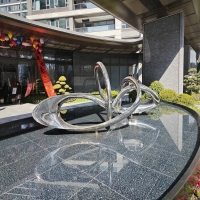
Abstract art sculpture, stainless steel metal sculpture, large-scale water feature sculpture






