Welcome to the website for landscape facilities products and knowledge.

How does the table’s surface handle exposure to industrial pollutants?
The performance of a table surface in industrial settings is critical, directly impacting safety, longevity, and operational efficiency. Exposure to pollutants—including oils, solvents, acids, alkalis, and particulate dust—poses a significant challenge. High-quality industrial tables are engineered specifically to handle this aggressive environment.
The primary defense lies in the material composition and specialized coatings. Popular surfaces include:
* Stainless Steel: Highly resistant to corrosion and easy to sanitize, ideal for food processing, pharmaceuticals, and labs.
* Epoxy Resin or Phenolic Resin: These solid, non-porous materials offer exceptional chemical resistance, preventing absorption of liquids and facilitating easy cleanup.
* Powder-Coated Steel: The electrostatic coating provides a hard, protective layer that resists chipping, chemicals, and moisture.
* High-Pressure Laminate (HPL): When chemically treated, certain HPL grades can withstand exposure to a range of pollutants.
The surface's handling capability is defined by its chemical resistance rating and physical durability. Manufacturers subject surfaces to standardized tests involving prolonged contact with various contaminants. A robust surface will not stain, swell, soften, or lose its structural integrity. Furthermore, features like integral drip lips, sealed edges, and non-porous textures prevent pollutants from penetrating seams or damaging the substrate.
Maintenance is equally crucial. While these surfaces are tough, prompt removal of pollutants is recommended. Using appropriate, non-abrasive industrial cleaners preserves the protective coating. Regular inspection for scratches or damage allows for timely repair, preventing small breaches from becoming major failure points.
Ultimately, a table's resilience to industrial pollutants is not accidental. It is the result of intentional material science, protective engineering, and proper procedural care, ensuring a reliable and safe workspace amidst demanding conditions.
Related search:
Recommendation
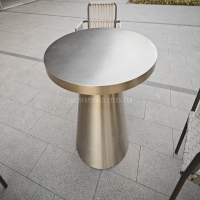
Outdoor Metal Table - Classic Outdoor Furniture, Stainless Steel Table, Durable and Reliable






