Welcome to the website for landscape facilities products and knowledge.

What is the table’s performance in terms of resistance to outdoor market use?
When evaluating a table's performance for outdoor market use, resistance to environmental stressors is paramount. The ideal table must withstand not just daily wear but also prolonged exposure to sun, rain, wind, and temperature fluctuations.
Performance hinges primarily on material selection. Powder-coated aluminum offers excellent rust resistance and structural integrity, while high-density polyethylene (HDPE) plastic is immune to moisture damage and easy to clean. Teak and certain thermally modified woods provide natural durability but require sealing. The construction quality—welds, joints, and fastener types—is equally critical for stability under heavy, frequent loading.
Key performance metrics include UV resistance to prevent fading and cracking, waterproofing to avoid warping and mold, and structural resilience against wind and impact. Tables with a high IP (Ingress Protection) rating or specific weatherproof certifications offer quantifiable assurance. For high-traffic markets, surfaces must also resist stains, scratches, and chemical cleaners.
Maintenance directly impacts longevity. While some materials like aluminum are low-maintenance, others need periodic sealing or protective covers. Ultimately, a table's performance is a balance of its inherent material properties, build quality, and the specific climatic challenges of its location, ensuring it remains functional, safe, and aesthetically sound season after season.
Related search:
Recommendation
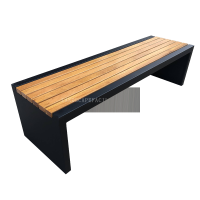
Modern Stainless Steel Begonia Wood Park Chair Outdoor Courtyard Leisure Sun Protection Bench Long Seat






