Welcome to the website for landscape facilities products and knowledge.

How does the table’s design accommodate outdoor heating elements?
Outdoor living spaces have evolved into year-round retreats, largely due to the strategic integration of heating elements into furniture design. Modern outdoor tables are no longer passive surfaces but are engineered to safely and stylishly accommodate various heat sources, extending the usability of patios and gardens into cooler seasons.
The most common integration is the built-in fire pit table. These designs feature a central, insulated well—typically lined with materials like stainless steel or ceramic—that houses a propane or natural gas burner. The table surface, often crafted from heat-resistant composites, granite, or thick treated metal, radiates a gentle ambient warmth while providing a stable, safe barrier. For a subtler approach, tables are designed with discreet central openings or side compartments to hold free-standing electric or infrared heaters, allowing for flexible placement and removal.
Material selection is paramount. Designers prioritize substances with high thermal mass, like concrete or slate, which absorb and evenly distribute heat, or use specialized composites that remain cool to the touch even when a heat source is active. The structural design also plays a critical role. Tables feature integrated ventilation channels or raised bases to prevent heat buildup underneath, protecting the furniture and the decking below. Wiring and gas line pathways are carefully concealed within sturdy legs or table columns, ensuring both safety and a clean aesthetic.
Ultimately, these design considerations transform a simple table into a functional hearth. By thoughtfully accommodating heating elements, outdoor furniture fosters a cozy, inviting atmosphere, turning any alfresco area into a warm gathering spot regardless of the evening chill.
Related search:
Recommendation
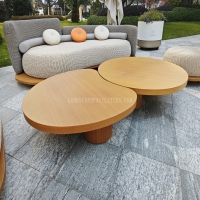
Elliptical metal outdoor table with nested design, resembling wood grain, round table






