Welcome to the website for landscape facilities products and knowledge.

What are the key considerations for designing landscape chairs that resist damage from pool chemicals?
Designing landscape chairs that withstand the corrosive effects of pool chemicals requires careful material selection and thoughtful engineering. The primary consideration is choosing materials inherently resistant to chlorine, salt, and other common pool chemicals. Aluminum, stainless steel, and high-quality synthetic resins like polyethylene are excellent choices due to their non-porous surfaces and chemical stability.
The chair's construction should minimize crevices where chemicals can accumulate, opting for smooth, seamless designs. Powder-coated finishes provide an additional protective layer against chemical exposure. For wooden options, teak or specially treated hardwoods offer better resistance than untreated varieties.
Maintenance features like quick-draining designs and removable cushions simplify cleaning, preventing chemical buildup. UV-resistant materials are equally important, as sunlight can accelerate chemical damage. By combining these factors, designers can create poolside chairs that maintain their appearance and structural integrity despite constant chemical exposure.
Related search:
Recommendation
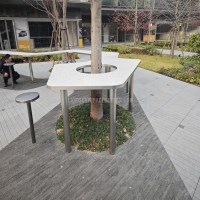
An outdoor bar counter with stainless steel and terrazzo materials in an irregular shape






