Welcome to the website for landscape facilities products and knowledge.

How does the bin’s design accommodate waste collection in zoological parks?
Waste collection in zoological parks presents unique challenges that demand specialized bin designs. Unlike conventional trash receptacles, zoo bins must balance functionality with animal safety, visitor accessibility, and environmental sustainability.
Modern zoo bins feature animal-proof locking mechanisms, often incorporating heavy-duty materials like reinforced steel or chew-resistant polymers to prevent tampering by curious wildlife. Many designs utilize hands-free operation with foot pedals or motion sensors to maintain hygiene standards while accommodating visitors carrying food or children.
The strategic placement of bins follows behavioral studies - clustered near high-traffic areas like food courts yet positioned to avoid animal enclosures. Color-coded systems (green for recyclables, red for general waste) combined with animal-themed graphics educate visitors while maintaining aesthetic harmony with natural surroundings.
Some progressive zoos employ underground compaction systems that reduce collection frequency by 60%, minimizing disturbances to animals. Solar-powered compacting bins with fill-level sensors are gaining popularity, optimizing staff efficiency through real-time monitoring.
These specialized designs address three core zoo requirements: preventing animal access to harmful waste, maintaining cleanliness without disrupting habitats, and encouraging proper visitor disposal through intuitive design. The result is a seamless waste management system that supports both conservation goals and visitor experience.
Related search:
Recommendation
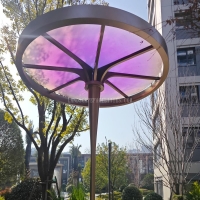
Metal frame with gradient color acrylic combined with high-end shading landscape facilities






